Coastal holiday let finance
Funding for seaside cottages and beach houses, where premium summer rates and strong seasonality shape both the income and the way lenders size the loan.

Funding coastal lets
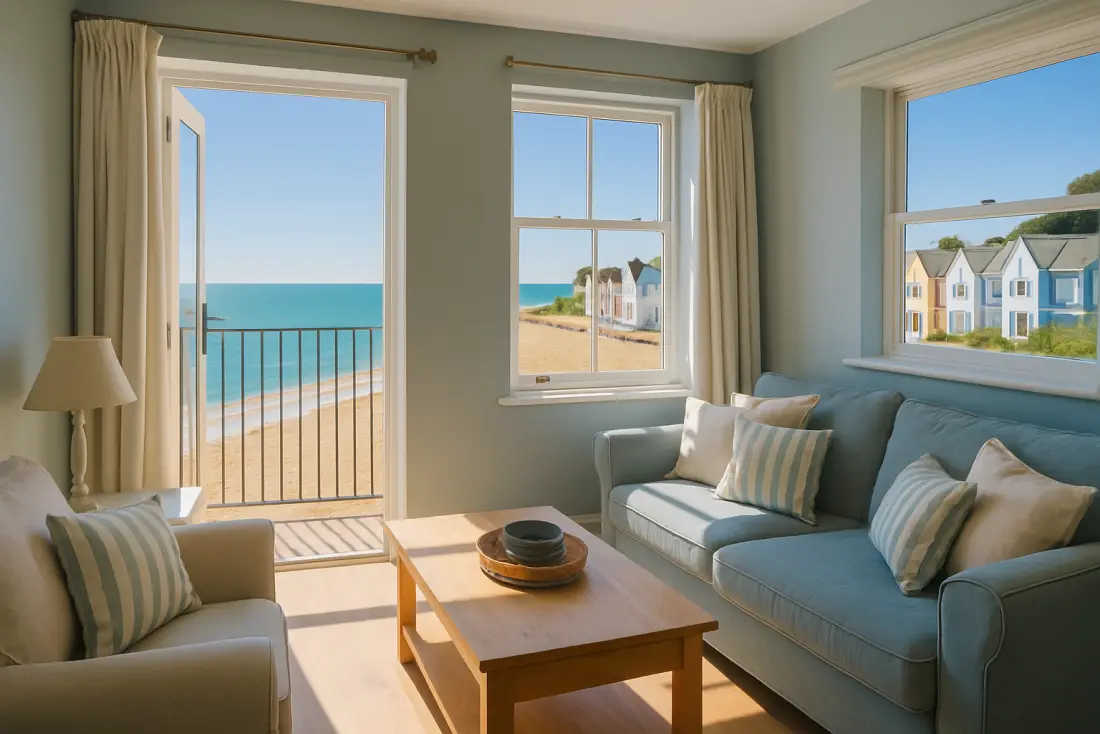
A coastal holiday let is a seaside cottage, beach house or apartment let to visitors on short stays, earning its income from the draw of the coast. These are among the most sought-after holiday let assets: properties near beaches, harbours and coastal paths that command premium rates through the summer and let strongly across school holidays and bank holidays, marketed week by week through agencies and direct booking platforms. The income is real and often substantial, but it is concentrated into the season, which is the defining feature lenders underwrite.
Seasonality is the whole conversation. A coastal property earns a premium in peak summer weeks and far less, or nothing, out of season, so a holiday let lender sizes debt on a blended income across the year rather than the headline summer rate, testing that the loan is affordable through the quieter months. The location premium that makes coastal lets attractive also raises questions specific to the coast, including second-home council tax premiums in many seaside areas. We arrange holiday let finance for owners of coastal properties as an arranger and introducer, not a lender, and we give no financial, legal or tax advice.
What we fund
- Seaside cottages and beach houses let week by week to visitors
- Coastal apartments near beaches, harbours and resort towns
- Properties with premium summer rates and strong school-holiday demand
- Coastal lets held personally, in a limited company or in an SPV
- Tired seaside properties bought for refurbishment and re-letting
Indicative terms
- Typical lot size (indicative)£200k to £2m and above
- Holiday let LTV (indicative)Up to ~70 to 75% of valuation
- Term rates (indicative)From around 5.5%
- Refurbishment funding (indicative)Up to ~70 to 75% of cost
Indicative only. Terms vary by lender, asset and borrower and are not an offer of finance.
How is a coastal holiday let financed?
We arrange a holiday let mortgage sized on projected short-let income across the whole year rather than the premium summer rate alone. For a coastal property that already trades, the lender works from the booking history and a blended seasonal projection, advancing indicatively up to 70 to 75 percent loan to value at rates from around 5.5 percent, with affordability tested through the quieter months rather than at peak. For a tired seaside property bought to refurbish, bridging finance carries the purchase and works while it is brought to a lettable standard, with the exit onto a holiday let mortgage once it is trading. Where the property is held through a company, often sensible given the second-home and tax position many owners now face, we arrange the debt around that structure and can point to our sibling site for <a href="https://limitedcompanypropertyfinance.co.uk">limited company property finance</a>. We arrange and introduce throughout; we are not a lender, and we do not give tax advice.
Which lenders fund coastal holiday lets?
Coastal holiday lets are funded by specialist holiday let lenders who understand seasonal income, rather than by buy-to-let lenders working from a flat monthly rent. Their underwriting centres on the season: they assess a blended income across low, medium and high season weeks, apply a realistic occupancy to each, and test that the loan is serviceable through the lean months rather than only when the property is full in August. A coastal location is generally a positive for the income case, because seaside demand is deep and proven, but lenders look beyond the headline summer figure to the year-round picture and the borrower's ability to cover quieter periods. They will also consider the local council tax position, since many coastal areas now apply second-home premiums and Wales requires a property to be let for at least 182 days a year to qualify as self-catering for non-domestic rates. We present the seasonal income honestly and flag the local rules, then match the borrower to lenders genuinely active in coastal markets.
Why do investors and lenders back coastal holiday lets?
The coast is one of the strongest demand stories in the holiday let market. Seaside destinations draw consistent domestic visitors, the best-located properties book out their peak weeks far in advance, and premium summer rates can make a coastal let one of the higher-earning holiday assets per week, with the trade-off that the income is concentrated into the season. The abolition of the furnished holiday lettings tax regime in April 2025 removed the old tax-specific advantages and, alongside second-home council tax premiums in many coastal areas, has pushed owners to look harder at structure and at year-round performance, with limited company holding increasingly common. None of that has dented the underlying visitor demand. For the owner that demand supports refinancing once a trading record exists, selling into an active market of lifestyle and investor buyers who covet coastal property, or holding for seasonal income. Lenders back the asset because seaside demand, in a recognised destination, is durable and provable.
Finance that suits this asset class
- Holiday let mortgagesTerm debt sized on blended seasonal short-let income.
- Bridging financeCarrying purchase and refurbishment until the coastal let is trading.
- RefinanceRe-gearing onto better terms once a seasonal booking record exists.
Useful calculators
Related guides
Fund a coastal lets deal
A view on fundability within one working day.
What makes a coastal holiday let distinct?
A coastal holiday let earns from the specific and powerful draw of the seaside: proximity to beaches, harbours, coastal paths and resort towns that visitors return to year after year. That draw produces premium peak-season rates and strong school-holiday demand, which is what makes the asset attractive, but it also concentrates the income into the warmer months in a way that inland or city lets feel less acutely. The combination of high summer earnings and low winter occupancy is the defining characteristic that shapes the finance.
For lending purposes that concentration is neither good nor bad in itself; it simply has to be underwritten honestly. A coastal property in a year-round destination with shoulder-season and off-season demand carries a stronger, smoother income than one that lets hard for twelve summer weeks and little else, and lenders size debt accordingly. We focus on holiday lets and serviced accommodation including coastal property, and we present the seasonal income realistically, because a coastal let funded on a blended annual figure is a sound loan while one funded on the summer headline is not.
How do lenders handle seasonality and premium summer rates?
Holiday let lenders are built to underwrite seasonal income, and coastal lets test that capability most. The standard approach blends low, medium and high season weekly rates, applies a realistic occupancy to each band, and then checks that the resulting annual income covers the interest with headroom through the quieter part of the year. A premium summer rate is welcome evidence of the property's appeal, but no lender sizes the loan on it alone, because the winter months still have to be serviced.
The borrower's resilience through the off-season is part of the underwriting. Lenders want comfort that the owner can cover the mortgage in a soft winter or a poor summer, whether from the blended income holding up or from other resources. A coastal property with genuine shoulder-season demand, dog-friendly or year-round appeal, or a hot tub and other features that extend the booking calendar, presents a stronger case than a pure summer asset. We set the seasonal profile out clearly, with the booking evidence behind it, because a realistic year-round picture is what secures the leverage.
How do second-home council tax premiums affect coastal lets?
The council tax and rates position is a live issue on the coast, and it bears directly on the economics a lender assesses. Many coastal and seaside local authorities now apply council tax premiums on second homes, which can add materially to the holding cost of a property treated as a second home rather than a genuine let. The line between the two matters: a property let commercially as self-catering accommodation for enough of the year can fall into non-domestic rates rather than council tax, which changes the cost base entirely.
The thresholds vary by nation. In Wales a property must be available to let for 252 days and actually let for at least 182 days in a year to be classed as self-catering for non-domestic rates, and second-home council tax premiums apply where it does not qualify. In England, qualifying self-catering properties move to business rates on similar let-day tests, and many councils apply second-home council tax premiums to properties that do not. We are not tax advisers, so the borrower and their accountant settle the position, but we flag it because it shapes the income net of costs that the lender ultimately underwrites.
What coastal location and property factors decide the loan?
Location quality is decisive on the coast. The strongest cases sit in recognised seaside destinations with proven, repeat visitor demand: close to a good beach or harbour, in or near a town with year-round amenities, and ideally with appeal that stretches beyond the summer. Lenders read that demand into both the income projection and the exit, because a property in a sought-after coastal spot lets reliably and sells readily, while one in a thin or declining resort funds cautiously whatever its peak weeks earn.
The property itself completes the case. Sea views, proximity to the front, parking, outdoor space, the standard of furnishing and any feature that lifts the nightly rate all feed into what the let can charge and how far the calendar fills. Coastal exposure brings its own checks, including condition, weatherproofing and any flood or erosion considerations a lender and valuer will weigh. We set the location and property case out clearly when we take a coastal let to lenders, because the destination is the durable asset behind the income the loan depends on.
How are coastal refurbishment projects funded?
Some of the best coastal cases involve a tired seaside property bought below value and brought up to standard. A dated cottage near a good beach can be transformed into a strong-earning let with the right refurbishment and furnishing, but the work creates a gap between purchase and trading income that a holiday let mortgage cannot bridge alone. Bridging finance carries the purchase and the works, indicatively up to 70 to 75 percent of cost on the refurbishment side, while the property is modernised and equipped.
The exit is designed before the bridge is drawn. Once the coastal let is furnished, marketed and producing summer bookings, or has a credible agency projection behind it, the position refinances onto a holiday let mortgage at the improved value and the new income. For a more substantial conversion, development finance funds the build against cost with the same refinance at completion. We arrange the short-term and term debt as one plan from the outset, so a seasonal property is bought, improved and refinanced without the short-term debt running past the first summer it needs to prove itself.
Worked example: buying a beach house to let
Take an illustrative purchase: an investor buys a four-bedroom beach house in a recognised coastal resort for £550,000, with an agency projection showing gross income of around £55,000 a year, heavily weighted to summer but with meaningful shoulder-season and half-term bookings. These figures are illustrative only, not a quote, and any real facility would be sized on the actual property, projection and valuation.
A holiday let mortgage at 70 percent loan to value advances £385,000, leaving a deposit of £165,000 plus costs. The lender does not size on the August headline; it blends the seasonal rates, applies a realistic occupancy, and tests that the income covers the interest with headroom through a soft winter. The house qualifying for non-domestic rates on its let-day record, rather than carrying a second-home council tax premium, strengthens the net income the lender assesses.
Over the first two seasons the beach house books out its peak weeks and fills a useful slice of the shoulder season, matching the projection. The owner can then refinance on the trading record to release equity toward another coastal property, or hold an asset earning a premium summer income in a destination buyers compete for. The seasonal income case and the debt plan were the same plan from the start.
Illustrative worked example only. Figures vary by lender, asset and borrower and are not an offer of finance.
Frequently asked questions
How do lenders deal with the seasonality of a coastal let?
Holiday let lenders blend low, medium and high season weekly rates, apply a realistic occupancy to each, and test that the resulting annual income covers the interest with headroom through the quieter months. They do not size the loan on the premium summer rate alone, because the off-season still has to be serviced, so a property with shoulder-season demand presents a stronger case.
Do second-home council tax premiums apply to coastal holiday lets?
They can, in many coastal areas, where a property is treated as a second home rather than a genuine commercial let. A property let commercially for enough days in the year can instead fall into non-domestic rates: in Wales the test is 252 days available and at least 182 days actually let. We are not tax advisers, so the position is one for the owner and their accountant, but it affects the income the lender assesses.
What deposit do I need for a coastal holiday let?
Indicatively around 25 to 30 percent of the purchase price, since holiday let lenders advance up to roughly 70 to 75 percent of valuation. A blended seasonal income that services the loan through winter, a clean booking record and a property in a recognised coastal destination all support the higher end of the leverage range.
Is coastal holiday let finance regulated by the FCA?
It depends on the structure. Lending to a limited company or for genuine investment purposes is generally unregulated, while some holiday let lending to individuals can fall within regulated mortgage rules, particularly where the owner intends to occupy the property for part of the year. We arrange and introduce finance; we are not a lender, and each lender applies its own permissions.
Funding a coastal lets asset?
Tell us about the deal and we will come back with a view on fundability and likely terms.