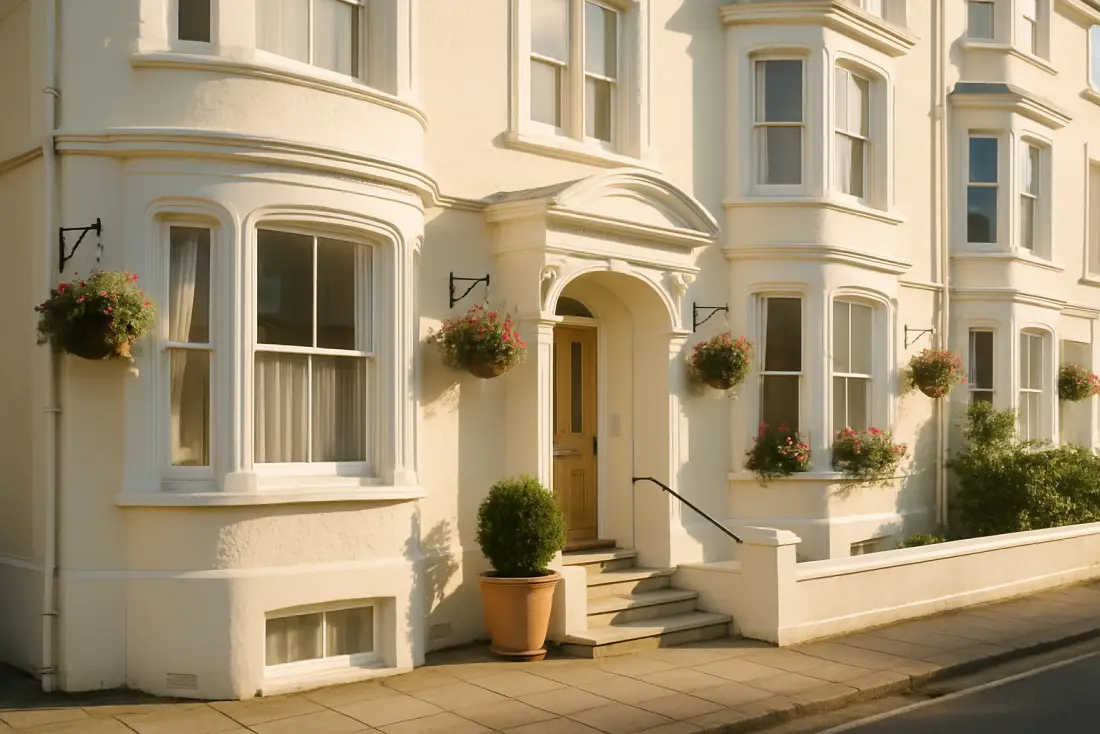
Aparthotel and guest house finance
Funding for aparthotels and guest houses run as operating businesses, sized on trading income and earnings rather than a single short-let rate.

Funding aparthotels & guest houses
An aparthotel is a building of serviced apartments operated together with hotel-style services such as reception, housekeeping and sometimes food and beverage, let nightly and short-term to corporate and leisure guests. A guest house sits in the same family: a property run as accommodation with an owner or manager providing services, somewhere between a bed and breakfast and a small hotel. What both share, and what separates them from a single holiday cottage or apartment, is that they are operationally run trading businesses, with staff, systems and a brand, rather than a property let passively for income.
That trading character changes the finance entirely. These properties usually sit in planning use class C1, hotels, or in a sui generis category rather than residential C3, and lenders fund them as commercial trading assets sized on the business income, typically on an EBITDA or adjusted net profit basis, rather than on a projected nightly rate alone. The underwriting looks much more like hotel lending than holiday let lending. Because of that overlap, an aparthotel with a substantial food, beverage or conferencing operation may sit better with our sibling site Hotel Property Finance, and we are glad to make that introduction. We arrange this finance as an arranger and introducer, not a lender, and we give no financial, legal or tax advice.
What we fund
- Aparthotels of serviced apartments run with reception and housekeeping
- Guest houses and small hotels operated as trading accommodation
- Owner-operated hospitality businesses bought as a going concern
- Conversions of buildings into aparthotels or guest houses
- Properties in C1 hotel or sui generis use rather than residential C3
Indicative terms
- Typical lot size (indicative)£500k to £15m and above
- Commercial LTV (indicative)Up to ~60 to 70% of valuation
- Term rates (indicative)From around 6.5%
- Development funding (indicative)Up to ~60 to 70% of cost
Indicative only. Terms vary by lender, asset and borrower and are not an offer of finance.
How is an aparthotel or guest house financed?
We arrange commercial finance against the trading business rather than a single short-let rate. For an established operation, a commercial mortgage is sized on the adjusted earnings of the business, typically EBITDA, advancing indicatively up to 60 to 70 percent of value at rates from around 6.5 percent, with the lender testing that the trading income covers debt service through normal fluctuations. For a going-concern purchase, the lender underwrites the historic accounts and the buyer's experience; for a conversion or a substantial refurbishment, development finance funds the works against cost, indicatively up to 60 to 70 percent, with the exit onto a term commercial mortgage once the business is trading. Where the operation is large or food-and-beverage led, it may fund better through our sibling site for <a href="https://hotelpropertyfinance.co.uk">hotel property finance</a>. We arrange and introduce throughout; we are not a lender, and we do not give tax advice.
Which lenders fund aparthotels and guest houses?
Aparthotels and guest houses are funded by commercial and hospitality lenders rather than by holiday let or buy-to-let lenders, because they are trading businesses secured on the property they operate from. The underwriting follows trading-business logic: lenders work from the historic accounts, normalise the earnings to an adjusted EBITDA, and test that the business services the debt with headroom through seasonal and economic swings, rather than sizing on a property yield alone. They weigh the operator's experience heavily, since a hospitality business performs only as well as the team running it, and they look at occupancy and rate history, the cost base, the brand or booking channels, and the location's depth of corporate and leisure demand. The property itself is assessed on both its trading value as a going concern and its alternative-use value if the business stopped. The lender field is narrower and more specialist than for holiday lets, and matching the operation to a credit team that genuinely understands hospitality trading income is most of the outcome.
Why do investors and lenders back aparthotels and guest houses?
Aparthotels and guest houses combine property value with a trading business, which is both their appeal and their complexity. A well-run operation in a city or destination with steady corporate and leisure demand can generate trading profits well above a passive let, and the aparthotel model in particular has grown strongly as guests favour apartment-style stays with hotel convenience. Because they are trading assets, the exits differ from a simple holiday let: an established, profitable operation can be sold as a going concern to an operator or investor who prices the earnings, refinanced on the trading record once it is built, or held for income that an experienced operator can grow. The property underneath provides a floor, since the building retains value and often an alternative use even if the business changes hands. Lenders back the asset where the trading income is genuine and the operator is capable, which is exactly the case we build.
Finance that suits this asset class
- Aparthotel and commercial financeTerm debt sized on the trading earnings of the operating business.
- Development financeFunding conversions and fit-out against cost before trading begins.
- RefinanceMoving onto term debt once the operation has a trading record.
Useful calculators
Fund a aparthotels & guest houses deal
A view on fundability within one working day.
What is an aparthotel or guest house as a finance asset?
An aparthotel is a managed building of serviced apartments run with hotel-style services, while a guest house is a property run as serviced accommodation by an owner or manager. Both are operating businesses: they have staff or active management, booking systems, a cost base and a brand, and they earn trading profit from accommodation and sometimes ancillary services rather than a passive rent. For finance purposes that places them firmly in the commercial and hospitality category, alongside hotels, rather than in the holiday let category where a single property is let on projected nightly income.
The distinction is fundamental to the lending. A holiday cottage or single serviced apartment is funded on projected short-let income; an aparthotel or guest house is funded on the trading performance of a business, assessed from accounts and earnings. That is why the underwriting resembles hotel lending and why the operator's track record carries so much weight. We arrange finance across the spectrum, from a small guest house to a multi-unit aparthotel, sizing the debt on the trading income the business genuinely produces.
Why does C1 or sui generis use change the lending?
Planning use class sits at the heart of how these properties are funded. A genuine aparthotel or guest house typically operates in use class C1, hotels, or in a sui generis category, rather than in residential C3, because guests stay transiently and services are provided. That classification confirms the property is a commercial trading asset, which is the basis on which commercial lenders engage and value it, and it removes the C3 short-let regulatory questions, the night caps and change-of-use issues, that affect residential flats run as short lets.
The practical effect runs through the whole deal. A property already consented for C1 or operating lawfully in a sui generis hospitality use is straightforward for a commercial lender to fund on trading income. A property being converted from residential or another use into an aparthotel needs the change of use secured, and a lender will want that planning position confirmed before committing term debt, with development or bridging finance carrying the project until it is. We establish the use class at the first conversation, because it determines the lender field, the valuation basis and whether the asset is funded as a trading business or as something else.
How do lenders underwrite trading income and EBITDA?
Commercial lenders size hospitality debt on the earnings of the business, not on a property yield. They take the historic accounts, normalise them to an adjusted EBITDA by stripping out one-off and non-recurring items and any owner-specific costs, and then test that the resulting earnings cover debt service with a comfortable margin through the swings a hospitality business experiences. A consistent, growing earnings record supports stronger terms; a volatile or thin one constrains the leverage whatever the headline turnover.
Several factors sit behind the earnings. Occupancy and achieved rate history show how the business performs across the year; the cost base, staff, housekeeping, utilities and channel commissions, shows how much of the revenue reaches the bottom line; and the booking mix between corporate, leisure and direct channels shows how resilient the demand is. Lenders also assess the operator's experience, because the same building produces very different earnings under different management. We present the accounts adjusted the way a hospitality credit team expects to read them, with the trading story set out clearly, because the quality of that earnings evidence is what secures the loan.
How are conversions and going-concern purchases funded?
Two routes recur. The first is buying an established operation as a going concern: the buyer acquires the property and the trading business together, and the lender underwrites the historic accounts, the buyer's experience and the sustainability of the earnings, advancing term debt on the trading value. A buyer with relevant hospitality experience taking on a profitable, well-documented business borrows more comfortably than a first-time operator stepping into a turnaround, and we match each to lenders accordingly.
The second is creating an aparthotel or guest house through conversion or refurbishment. A building bought to convert produces no trading income on day one, so development finance funds the works against cost, indicatively up to 60 to 70 percent, while the change of use is secured and the property is fitted out. Once the operation is open and building a trading record, the position refinances onto a term commercial mortgage on the established earnings. We arrange the development and the term debt as one plan from the outset, so the project moves from conversion through opening to trading refinance without the short-term debt running ahead of the business.
When should an aparthotel fund through hotel finance instead?
There is a genuine boundary between a serviced-accommodation aparthotel and a hotel, and where a deal sits on it affects which lenders are the right fit. An aparthotel that is essentially apartments with reception and housekeeping, light on food and beverage, sits comfortably within the serviced accommodation and short-let world we focus on. An operation with a substantial restaurant, bar, conferencing or full hotel services generates a different income mix and a different cost base, and is read by lenders as a hotel.
Where the operation tips into full hotel territory, it usually funds better through specialist hotel lenders, and our sibling site Hotel Property Finance exists for exactly that. We are happy to place a deal wherever it funds best rather than forcing it through one door, so an aparthotel-led operation stays with us while a food-and-beverage-led or full-service hotel operation goes to the hotel side. Drawing that line early, against the real trading mix, gets the deal in front of the credit team most likely to back it on the best terms.
Worked example: buying a trading aparthotel
Take an illustrative purchase: an experienced operator buys a twelve-unit aparthotel in a regional city as a going concern for £3m, with three years of accounts showing adjusted EBITDA of around £320,000 a year from steady corporate and leisure demand. The property is consented in use class C1. These figures are illustrative only, not a quote, and any real facility would be sized on the actual business, accounts and valuation.
A commercial mortgage at 65 percent of value advances £1.95m, leaving £1.05m of equity plus costs. The lender normalises the accounts to a sustainable EBITDA, tests that the earnings cover debt service with a comfortable margin through a softer year, and takes weight from the operator's track record and the property's standing as a going concern with an alternative use behind it.
Over the following years the operator improves occupancy and direct bookings, lifting earnings. The business can then refinance on the stronger trading record to release equity toward another site, or be held and grown, or sold as a going concern to an investor who prices the earnings. The trading income case and the debt plan were the same plan from the start, which is how we structure a hospitality deal.
Illustrative worked example only. Figures vary by lender, asset and borrower and are not an offer of finance.
Frequently asked questions
How is aparthotel finance different from a holiday let mortgage?
An aparthotel is a trading business, so lenders size the debt on the operation's earnings, typically an adjusted EBITDA from the accounts, rather than on a projected nightly rate as a holiday let mortgage does. The underwriting resembles hotel lending, weighs the operator's experience heavily, and uses commercial and hospitality lenders rather than holiday let lenders.
What planning use class do aparthotels and guest houses fall under?
They typically operate in use class C1, hotels, or in a sui generis category rather than residential C3, because guests stay transiently and services are provided. That commercial classification is the basis on which lenders fund them as trading assets, and a conversion from residential needs the change of use secured before term debt is committed.
Should my aparthotel be financed as serviced accommodation or as a hotel?
It depends on the trading mix. An apartment-led operation with reception and housekeeping sits within serviced accommodation, while one with a substantial restaurant, bar or conferencing operation reads as a hotel and usually funds better through specialist hotel lenders. Our sibling site Hotel Property Finance covers that end, and we place each deal where it funds best.
Is aparthotel and guest house finance regulated by the FCA?
Commercial lending to a business secured on the hospitality property it trades from is generally an unregulated commercial contract. Regulation can apply in specific circumstances, such as where the security includes a dwelling the borrower occupies. We act as arranger and introducer only; we are not a lender, we do not give tax advice, and each lender applies its own permissions.
Funding a aparthotels & guest houses asset?
Tell us about the deal and we will come back with a view on fundability and likely terms.